Escape from London to a vineyard in Kent

May 11, 2025

Years ago when I was writing regularly about English and Welsh wine one thing stood out as being blindingly obvious: the vineyards were obvious destinations for tourists. I loved practically all of the dozens and dozens I visited and it was clear that they only needed to build restaurants and other facilities to become major destinations where people could escape the sometimes claustrophobic atmosphere of the towns to experience the well being of a vineyard with its own enclosed countryside. 

Yesterday I took leave of my new occupation of writing, walking  and talking about London to remind myself of what I was missing.

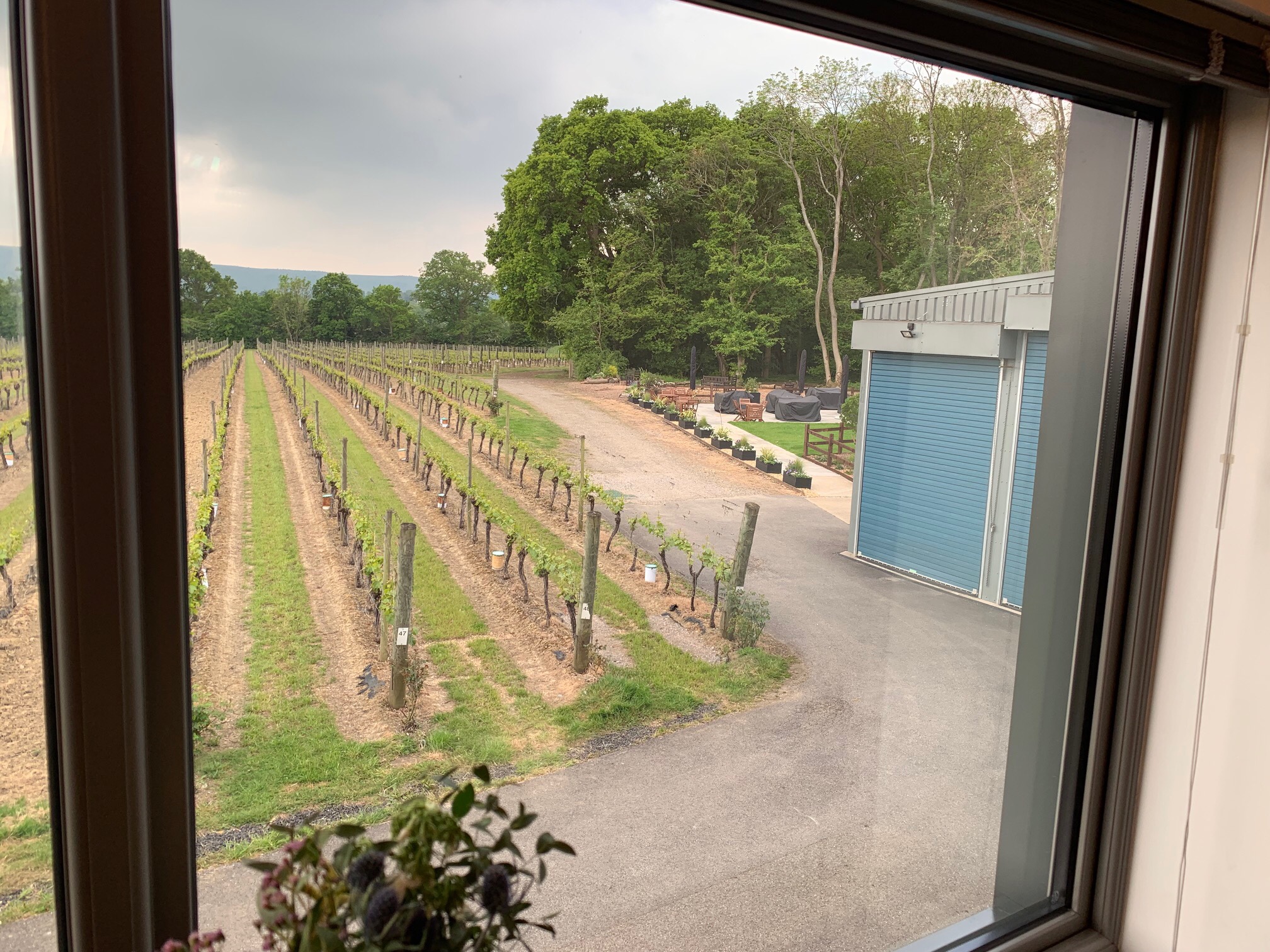
We took a train from London (Blackfriars) to Shoreham in Kent (not the one in Sussex) to stumble across a vineyard, The Mount, that I had barely heard of but which fulfilled most of my dreams. For a start it was one of the few vineyards close to a railway station so you don’t have to worry about drinking and driving. You only have to walk a few yards before encountering a gorgeous pathway, where long rows of cow parsley keep the nettles at bay, taking you right around the vineyard by the Darren chalk stream and the lovely village of Shoreham, a shrine to Samuel Palmer, the painter of sublime local landscapes after whom one of the local pubs is named.

 What a pity that Palmer (1805-1881) isn’t around today to paint the ten acres of vines bordering on a restaurant and open air bar serving wines from the vineyard and from elsewhere (the house wine is actually French). We enjoyed a delicious Flint Dry white made mainly from the Bacchus grape which has pioneered the revival of English white wines and a very agreeable red made from the Regent and Rondo varieties. 

Like most other English still wines they are not the cheapest but that is the last thing you need to think about when you are escaping from the rest of the world at this charming vineyard.

The open air bar

The winners of Winbirri

November 22, 2021

Winbirri in November

It is now over three years since Winbirri vineyard in Norfolk stunned the wine world when its 2015 Bacchus was declared the best single varietal wine in the world from 17,200 entries in the Decanter awards, the first time that an English still white wine has received such an accolade. That sort of thing if it ever happens is supposed to occur in the south of the country. But we all know that wine tasting competitions are a bit of a lottery so what has been happening since?

Last week I was in Norwich accompanying my wife at a Delia Smith food event and decided to grab a cab and go the six miles to Winbirri. I was just planning to buy a couple of bottles as it is the close season but was lucky enough to find Lee Dyer, the owner and winemaker ensconced in his office. I congratulated him on his 2019 Bacchus being voted that very week the second best white varietal under £20 in the Vivino ratings. It was beaten only by a 2019 Tabordet Pouilly-Fumé but he pointed out that if you look at the actual ratings – which I did – the Norfolk Bacchus had scored more points than the Pouilly-Fumé so should have been top. The algorithm must have had a headache.

This is but the latest top award Winbirri has won since its 2017 success. Hopefully this will continue. Lee says that this year’s crop will only be about 60% of normal because of bad weather earlier in the year but the quality is expected to be good thanks to an unexpectedly warm September and October not shared in the south. This is not surprising as the dryness of East Anglia has turned out to be ideal for Bacchus, now Britain’s best selling domestic white wine. It was introduced to England by Piers Greenwood of New Hall Vineyards in Essex after he had spent several years in Alscace learning the craft.

Something else really surprised me about my visit. Winbirri is rated #1 out of 136 things to do in Norwich by Tripadvisor with a five star rating. Nearly everyone reported that their visit was excellent. Yet – wait for it – hardly anyone I spoke to from an admittedly small sample in Norwich including high-ups in the Delia Smith organisation had even heard of it. Clearly most of the rave reviews had been coming from visitors from elsewhere. I have had similar experiences in other parts of the country. People often don’t know of vineyards close to them though usually not near main roads. UK vineyards still have a lot to play for.


The search for the Englishman who invented Champagne

September 13, 2021

The search for who “invented” Champagne is beginning to look like a viticultural version of Who Wrote Shakespeare, a saga that could go on and on. It is now generally accepted, even among knowledgeable French people, that the “methode champenoise” (ie allowing still white wine to have a secondary fermentation in the bottle) happened in England decades before the French got around to it. But who was responsible?

A new book by leading wine expert Stephen Skelton is in no doubt. The title of the book “ The Knight Who Invented Champagne” gives the accolade to Sir Kenelm Digby on the grounds that his furnaces – now fuelled by coal which achieved much higher temperatures than wood – were able to make glass bottles strong enough to withstand the enormous pressures of secondary fermentation. At this stage French champagne was a still white wine. France didn’t achieve secondary fermentation in the bottle until much later when they switched to coal. The proposition that the monk Dom Perignon was the inventor was fake news.

Does Kenelm Digby have a better claim? Stephen Skelton’s book is a fascinating tour d’horizon of winemaking, glass manufacture, politics and the astonishing life of the buccaneering Digby himself who killed several people in close combat. Well worth a read. But on the substantive issue there is a problem. Even if his factories did pioneer robust bottles – which is still debatable – that is only a sine qua non (without which, not) of  the invention of “champagne” not a cause. You can’t have secondary fermentation without robust bottles but robust bottles alone don’t make or cause Champagne because you have to have something to put in the bottles.

 Digby, curiously, has no known connection with wine. The word is not even mentioned in his magnum opus :The Closet Opened” which Skelton described as “an amazing treasure trove of domesticity” in which (apart from being the first place to mention eggs and bacon for breakfast) the word “bottle” is mentioned 98 times but never a hint of his involvement with it – and no mention of wine at all or indeed of glass-making. As the author admits, that is somewhat curious. 

The main “proof” of Digby’s involvement is not anything he said but the sworn testimony in 1662 of four men before a court investigating a patent dispute. They claimed that Digby had invented glass bottles 30 years earlier.

For mentions of wine have to turn to champagne guru Tom Stevenson’s discovery in 1998 of a paper presented to the Royal Society In 1662 by Christopher Merret recording how coopers added vast quantities of sugar and molasses to “make them drink brisk & sparkling”. I was so amazed when I read this at the time that I wrote an editorial about it in The Guardian. However, this did not mean that Merret invented the methode champenoise” (except in the old Latin sense of “invenio” – to come across something) he merely recorded what he had seen among the coopers of London. He was a reporter. 

While Digby may have been a sine qua non he was not the only one. There were others, not least Sir Robert Mansell who in 1615  – when Digby was only 12 years old –  persuaded James l to ban wood in furnaces because forests were needed to reconstruct England’s navy. It could take thousands of trees to make a single ship. That certainly accelerated the trend to make strong  bottles from coal-fired furnaces

Until documents are found linking individual coopers with a purposeful desire to exploit the new “discovery” it is tempting to say that although strong bottles were a sine qua non the whole movement towards sparkling wine wasn’t caused by anyone. It just happened. But without question it happened in England not France even though our geographic neighbours have yet to fully admit it. 

The Knight Who Invented Champagne (Published by the Author £25)


British vineyards at the crossroads

September 7, 2021
Reds on a roll

Britain’s wine producing industry is in surprisingly good heart after the tremors of lockdown judging by today’s WINEGB tasting at the Royal Horticultural Halls in London. It is not obvious why this should be so as production has dropped from 13m bottles in 2018 to only 8.7m bottles in 2020 mainly due to bad weather Some say 2021 could be the worst since 2012. However sales in 2020 were 30% up on the previous year and new plantings of vines are predicted to be 1.4m this year. This is clearly a very bold investment for the future

in an industry that is like no other not least because of the often very large timelag between planting and sales.

Lockdown hit trade sales badly but triggered a boom in online sales and, as vineyards re-opened, helped vineyard tourism and cellar door sales. Exports are also on the rise.

Our sparkling wine vineyards are festooned with gold medals and the quality is good enough to charge premium prices. The big new thing is that our red wines – mainly Pinot Noir, the Bergundy grape – are now winning top prizes, something that would have been unthinkable only a few years ago

The worry is price. You are pushed to find any English or Welsh wines under £10 a bottle though there are some – like Brightwell in Oxfordshire, New Hall in Essex, Halfpenny Green, Shropshire and the Wine Society that just about manage it.

So far this doesn’t seem to have mattered as most vineyards say that can sell all they can produce though there are rumblings about overstocking. They are clearly helped by the encouraging way customers are keen to buy local food and wines, a trend that lockdown and Brexit have encouraged.

It is also due to the fact that there is a huge amount of spending power in the economy thanks to freewheeling increases in the money supply which at some stage will have to stop. Put this together with the millions of new of vines being planted and there is clearly a risk that oversupply in the future might lead to a price cutting war. None of this pessimism was evident among people I spoke to today and let’s face it we still produce only a small fraction of the wines we consume so there is all to play for. Let’s hope the bandwagon keeps rolling.


A downer for Chapel Down

February 4, 2020

What a shame. Chapel Down the U.K.’s biggest and fastest expanding wine operation, is closing down its Gin Works at King’s Cross in London, This is a few months after it closed the restaurant there. They are to be commended for taking swift action to close a lossmaker that has been open barely a year rather than let it bleed on but this doesn’t alter the fact that this is one of the few big setbacks in the seemingly unstoppable revival of UK wine and spirit industry. The rest of Chapel Down’s vineyard expansion continues apace but this should come as a timely reminder of the danger of expanding too fast on too many fronts. Why did it happen? We don’t know the full story yet but I have to ask myself why as a long-term advocate of UK wines, a regular diner in King’s Cross and – disclosure – owner of a few shares in Chapel Down (because of a generous 33% discount on wine purchases which still obtains and which I explained here https://bit.ly/398dvp8 ) I never actually drank or dined at the Gin WorksIt looked lovely and I was impressed when I had a brief look around but despite meaning to go on a number of occasions when we finally decided to the restaurant it had closed. One of the key problems was that it was definitely off piste being several hundred yards away from a huge variety of restaurants that are springing up in the new King’s Cross development and more recently into Coal Drops Yard. Also it had a bit of an identity problem. It was a brazen expansion into the fast growing gin industry but it was also selling English wine with a restaurant. the lure of gin does not seem to have been enough.


British wine sees red . . at last

November 29, 2019
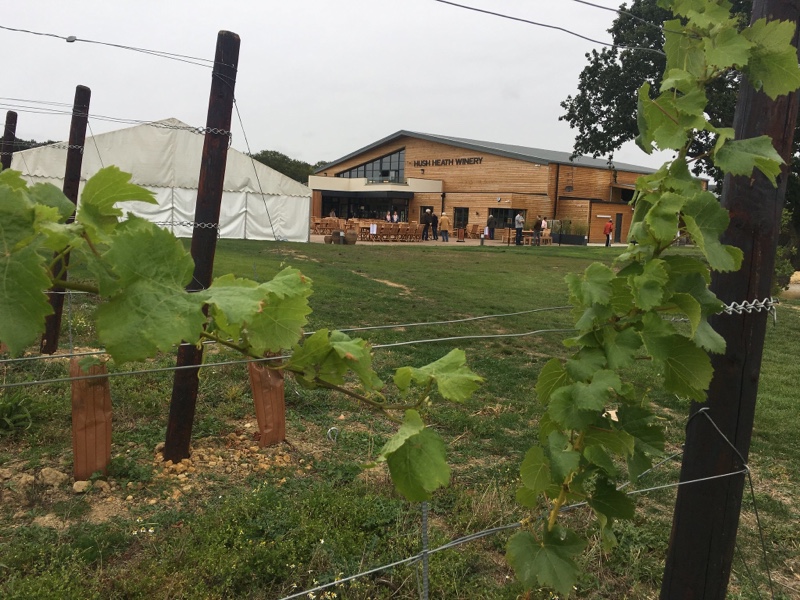
Hush Heath’s vineyard
This week will go down in history as the first time an English red wine has won a gold medal in an internationally respected competition (International Wine Challenge). It was awarded to the highly acclaimed Hush Heath vineyard under the watchful eye  of distinguished consultant winemaker Owen Elias. 
One of the interesting things about it is that the wine was made from Pinot Meunier grapes which are a sort of stocking filler for classic champagne which usually concentrates on Pinot Noir and Chardonnay with Meunier as a low volume addition. 

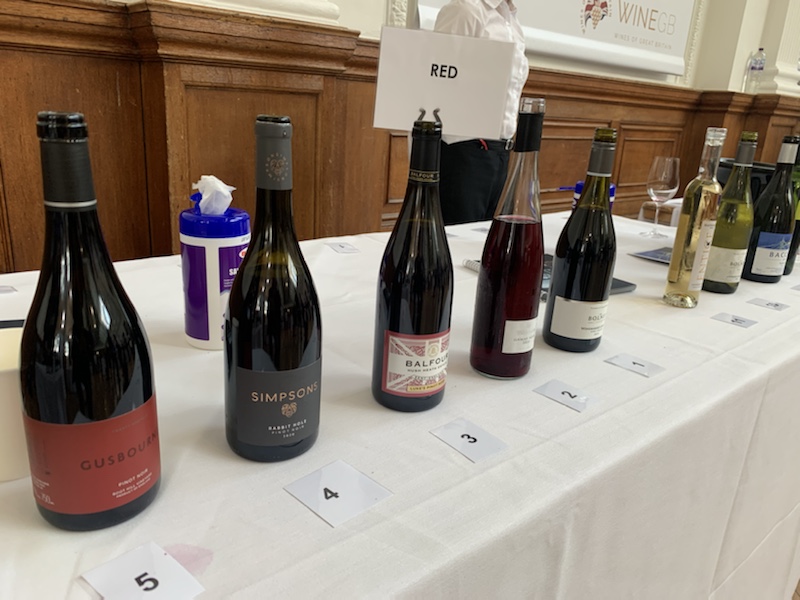
I have been eagerly awaiting the arrival of a red Pinot Meunier as it is hardly ever made into a red wine. At this year‘s WineGB trade tasting there were two red meuniers available at two stalls side-by-side – Hush Heath and Simpsons – and I wasn’t sure that the both knew the other had it on offer. 

The leaves of Pinot Meunier  (French for miller) look as though they have been dusted with flour which is why it is often known here as Miller’s Burgundy and why Hush Heath call it Red Miller. Some experts thing that despite its outward appearance it is almost identical genetically to Pinot Noir – which makes it all the more interesting that it has beaten its relative to gold.  Interestingly, Simpsons Rabbit Hole Pinot Noir 2018 got a silver medal as did Bolney Estate’s Pinot Noir 2018.
It remains to be seen whether we need an exceptional vintage like 2018 to produce more gold medals for red wine but there is clearly all to play for and this could be another milestone in the onward march of UK wines.
I visited Hush Heath’s expanding vineyard earlier this year and was very impressed. It was probably the best “vineyard experience” that I had come across thanks partly to a large decked terrace and a 200 seater tasting room with fine snacks at £20 for two. 

British wine rolls on . . .

September 4, 2019

With all the economic uncertainty around us it is comforting to be hit by an industry on the roll. At today’s annual tasting of English and Welsh wines organised by WineGB at the RHS Lindley Hall in London there was a palpable buzz in the air on the back of a record 13.2m bottles produced from last year’s bumper harvest. This was more than double the previous year’s output with almost 70% accounted for by sparkling wine which continues to win top gold medals in international competitions. This year’s crop could turn out to be the second best after last year’s. Three million new vines were planted this year, nearly twice 2018. Happy days . . .

But what struck me most were innovations among the still wines. There were two Pinot Meuniers – one white by Simpsons and one red by Hush Heath – which I have never come across before. Pinot Meunier is one of the two red grapes from which classic champagne is made along with white Chardonnay. The other red is Pinot Noir which is being successfully grown in the UK but Meunier is hardly ever turned into a still wine anywhere so it is great to see two English vineyards taking the plunge to produce two very agreeable wines.

Meanwhile, the long established Three Choirs on the Gloucester/Herefordshire border has branched out into producing fizz and dry white in small tins – a great way to sample UK wines – and they are also selling Bacchus in a box.

Bacchus (made from Riesling-Silvaner and Müller-Thurgau) is now Britain’s flagship white wine. It reached new heights at the 2017 Decanter World Wine Awards where it was voted best in the world.

What is a bit puzzling is the huge price differentials among the Bacchus wines on show bearing in mind that to most palates there is not a great deal of difference. They range from Brightwell of Oxford charging only £9.99 to a recent arrival, Montgomery in Wales which charges £20 a bottle (they apparently sell it all without difficulty) and Hattingley Valley which clocks in at £22.50. New Hall vineyards in Essex, which introduced Bacchus into the UK and has been a big supplier to other vineyards, charges £11.50 for its Bacchus (though not at the WineGB show as it is not a member). Bacchus is likely to continue to lead the revival of UK white wines – at whatever price – not least because academic studies have revealed large regions of Essex and elsewhere as being ripe for development.

Vineyard tourism is expanding fast while exports of UK wines grew from 4% to 8% of total sales in 2018 and are likely to continue to expand thanks to concerted efforts by the industry and government. If there is one place that needs more effort it is Europe. WineGB statistics show that 43% of all exports went to Scandanavia but none – yes, none- to France, Italy, Spain or the rest of the continent of Europe. I leave you to figure that one out.

@BritishWino


Ridgeview, Nyetimber and the UK wine revival

May 24, 2019

Simon Roberts amid the Chardonnay

THE FIRST thing that strikes you on entering Ridgeview’s beautifully manicured vineyard is the maturity of the vines, now 25 years old.  They are gradually being replaced but are a timely reminder that Ridgeview has been there since the start of the explosive phase of the UK sparkling wine revolution. 
It is still very much a Roberts family business even though head winemaker Simon Roberts (above) says he trained as a marine engineer and never intended to join the firm until the bug bit and he found, surprisingly, that he had unusually fine taste buds. Which comes in handy if you are tasting up to 60 different varietals to get a consistent blend as he does for their Bloomsbury label. 

The public image of Ridgeview has undoubtedly been affected by the trail-blazing success of fellow Sussex producer Nyetimber. Simon is the first to admit that the international success of Nyetimber was, and is, hugely important for the success of UK fizz. However, the idea gaining currency by international experts such as @JancisRobinson and Tom Stevenson that without Nyetimber there would have been no sparkling wine industry in the UK seems to me to be highly debatable to say the least.

Nyetimber wasn’t the first to produce sparkling on a commercial scale. From 1983 the Carr Taylor vineyard near Hastings was producing sparkling from (non Champagne) grapes  and in the same year New Hall in Essex produced the first sparkling from Champagne grapes on a commercial scale – and for years was the main if not only producer of Champagne grapes for southern vineyards. Before them there is a long history of vineyards producing sparkling wine often of a high quality but not on a commercial scale.   

View from the tasting room towards the snacking zone

The plantings at Ridgeview were nothing to do with the founders of Nyetimber whom they did not meet until later.   Simon’s father, the revered Mike Roberts,  had always liked Champagne and was originally looking to set up in France until he decided to plant a vineyard near his Sussex roots. By the time Nyetimber burst onto the scene with international gold medal recognition in 1997 the vines at Ridgeview were already two years old and destined for success. Since then Ridgeview has been festooned with gold medals including “best sparkling wine in the world” and culminating last year when it was declared winemaker of the year in the International Wine and Spirit Compeition 2018. This was the first time in the near-50 year history of the competition that the prize has been awarded to an English vineyard.

And – vitally important – throughout this period the two great drivers of the UK wine revival – global warming and the supply of highly trained wine makers from Plumpton College – were continuing apace helping the growing numbers of people planning vineyards up and down the country. It is difficult to avoid the conclusion that without Nyetimber the UK vineyard explosion would undoubtedly have been slower but it would certainly have happened – and almost certainly led by Ridgeview. 

Meanwhile Ridgeview’s expansion is continuing apace with a spanking new winery complete with cellar under construction. Simon says they will remain a family firm from CEO Tamara Roberts downwards.  They don’t want to join the million-bottles-a-year club. Half of that amount will suit them fine. Compared with the likes of Denbies, Rathfinny, Hush Heath or Chapel Down Ridgeview is almost boutique with a small tasting area looking out across the rows of Chardonnay to a discreet tasting and snacking area (see above).

It has the great benefit of being a short taxi ride from Burgess Hill station. Like Nyetimber it has been forced by the price of land to have vineyards elsewhere (17 from Essex to Hampshire) but the comparative smallness of the home vineyards – you can walk through woodland from the Chardonnay to the Pinot Meunier – is reflective of their desire for quality not quantity, a fact underlined when we had a lovely tasting of their delicious award-winning fizz. Long may it continue. 


The UK wine revolution – bring on the still whites . . .

April 22, 2019

Then and now . . Albury’s 17th cent vineyard and Winbirri 2015

AS THIS year’s buds burst and the bottles from last year’s bumper harvest are prepared for sale It is time to ponder whether the next big surge in UK winemaking is about to happen.

Our sparkling wines are now world-class and can look after themselves. The question is whether our whites and maybe even our reds are about to follow, and whether they will benefit from a ‘halo’ effect.

The root of all this is psychological. For decades we have been conditioned to believe we cannot make top-class wines in Britain even while wine-making techniques were improving dramatically. Enjoying a glass of wine is a deeply psychological experience conditioned by numerous factors including sunshine, who we are drinking it with, what we have just eaten or drank before, the price and what others say about it. Experts regularly get it wrong, often giving a gold medal to a wine which others rate as bronze or even less.

I was thinking of this last night when I opened an eagerly awaited bottle of Winbirri Bacchus 2015 with some friends. This is the still white wine which has achieved something that no other UK vineyard has come near to. At the 2017 Decanter international wine competition it was awarded not just a gold medal but a platinum – chosen from those that have already scored gold – and then voted the best wine of its kind in the world.

Yes, in the world – and all this from a vineyard in Norfolk that is further north than Birmingham. Eat your hearts out Kent and Sussex!

I am a very seasoned wine drinker though – like over 95% of the population – I don’t have the sophisticated taste buds that experts appear to have. When I checked what the experts had found in this Winbirri I could just about smell “grapefruit“ but not the other conflicting flavours which reviewers claimed to notice including lemon, “aromas of hedgerow, elderflower and pear” or “grassy notes” or goosberry and passion fruit or blackcurrant leaves (yes, leaves) or – wait for it – “fresh tennis balls”. Even if I had picked up these “notes” I don’t know what the connection is with enjoyment of the wine.

In this context it remains to be seen whether Winbirri’s wine is a one off, – but still an extraordinary achievement – or whether it is a harbinger of things to come. I would bet on the latter.

The dry east coast of England is proving a wonderful stomping ground for Bacchus, named after the God of wine, a grape whose parentage is two German grapes that were popular when the UK wine revival was in its infancy 40 years ago – Silvaner- Riesling and Muller Thurgau. It was introduced to Britain by New Hall Vineyards further south in Essex which is far and away the biggest producer of Bacchus and has supplied grapes to other well-known vineyards for years.

Three years ago in this column I suggested that white ones might be about to emerge from the cold. It hasn’t yet happened in a big way, but these things take time and there are enough good English whites – such as Solaris, Ortega and Chardonnay (when it isn’t being used for sparkling) – to give hope for the future as long as they don’t price themselves out of the market.

And then there are the red wines. These are the least suitable for English soils but we have started to produce Pinot Noir that has been winning silver medals. With the benefit of last years bountiful harvest this year will be a crucial test for our Pinot Noir and other reds. It is a hugely competitive market world-wide. But now that English and Welsh fizz is gaining us a worldwide reputation for fine wines, anything could happen. As long as the psychology is on our side.


A Tale of two London wineries

January 1, 2019


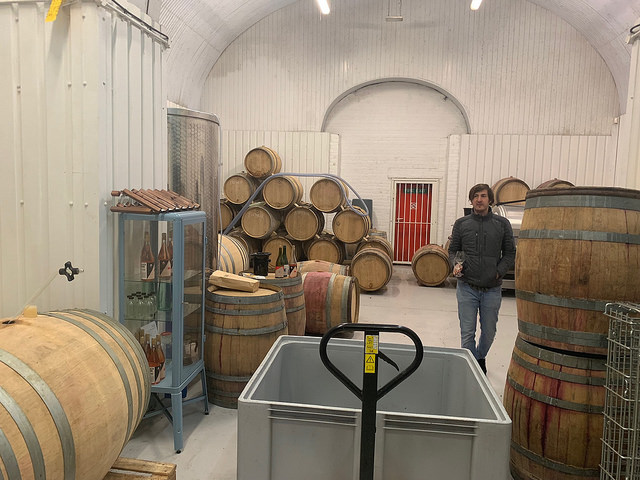
The Renegade winery
If I had been told a few years ago that I would soon be drinking a lusty Bacchus wine from Herefordshire grapes fermented partly in a clay amphora in a new winery under a railway arch in a back alley in Bethnal Green I would have opted out.
But here I was over Christmas in Warwick Smith’s venture called Renegade London Wine, one of the two new London wineries I visited over Christmas and which I have been following since they were both at the planning stage.
The other is Blackbook in Battersea set up by Plumpton-trained ex sommelier Sergio Verrillo from America and his wife Lynsey. This doesn’t yet have an atmospheric wine bar like Renegade but it has achieved a lot in a short space of time. It has attracted an astonishing amount of publicity for such a small operation from Harpers through The Times and others to City AM for its wines which are already highly regarded. They have tripled production this year to nearly 18,000 bottles and the current rosé has already sold out.

Blackbook
Wine guru Matthew Jukes praised their chardonnay to the skies. Blackbook already does tasting tours and has been taking early steps to establish its own vineyard in England to run an integrated operation. These boys are not without ambition. Unsurprisingly Sergio admits that success so far has “massively exceeded my expectations”.
Renegade is on a similar ambitious growth path and is selling what is claimed to be the first sparkling wine for centuries made (though not grown) in London for a cheeky £100 a bottle (photo below) which has apparently been selling very well – though whether to collectors or consumers is a moot point.<img src=”http://user42029.vs.easily.co.uk/wp-content/uploads/2019/01/698791E6-1A06-42CB-B16B-845D37F50AAE.jpeg” alt=”” width=”180″ height=”240″ class=”aligncenter size-full wp-image-802
The £100 bottle
It was fermented in the crypt of Nicholas Hawksmoor’s Christchurch masterpiece in Spitalfields which should add a psychogeographic touch to it. Renegade also make a mean Pinot Noir (from grapes grown abroad).
There are now four wineries operating in central London, the others being London Cru (the first) and Vagabond by Battersea power station. What makes Blackbook and Renegade particularly interesting is that they have been started up by young entrepreneurs without bigger companies behind them. I have worried about the premium prices they charge – with Renegade even more premium than Blackbook – but there seems to be no shortage of buyers. Long may they continue.