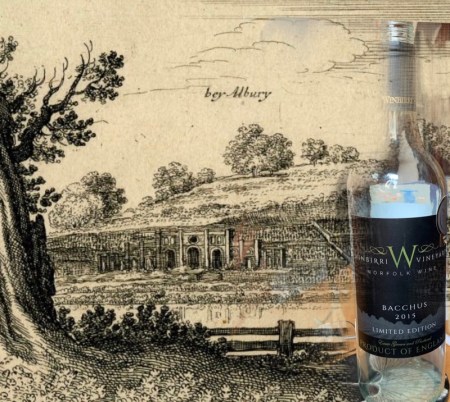
Then and now . . Albury’s 17th cent vineyard and Winbirri 2015
AS THIS year’s buds burst and the bottles from last year’s bumper harvest are prepared for sale It is time to ponder whether the next big surge in UK winemaking is about to happen.
Our sparkling wines are now world-class and can look after themselves. The question is whether our whites and maybe even our reds are about to follow, and whether they will benefit from a ‘halo’ effect.
The root of all this is psychological. For decades we have been conditioned to believe we cannot make top-class wines in Britain even while wine-making techniques were improving dramatically. Enjoying a glass of wine is a deeply psychological experience conditioned by numerous factors including sunshine, who we are drinking it with, what we have just eaten or drank before, the price and what others say about it. Experts regularly get it wrong, often giving a gold medal to a wine which others rate as bronze or even less.
I was thinking of this last night when I opened an eagerly awaited bottle of Winbirri Bacchus 2015 with some friends. This is the still white wine which has achieved something that no other UK vineyard has come near to. At the 2017 Decanter international wine competition it was awarded not just a gold medal but a platinum – chosen from those that have already scored gold – and then voted the best wine of its kind in the world.
Yes, in the world – and all this from a vineyard in Norfolk that is further north than Birmingham. Eat your hearts out Kent and Sussex!
I am a very seasoned wine drinker though – like over 95% of the population – I don’t have the sophisticated taste buds that experts appear to have. When I checked what the experts had found in this Winbirri I could just about smell “grapefruit“ but not the other conflicting flavours which reviewers claimed to notice including lemon, “aromas of hedgerow, elderflower and pear” or “grassy notes” or goosberry and passion fruit or blackcurrant leaves (yes, leaves) or – wait for it – “fresh tennis balls”. Even if I had picked up these “notes” I don’t know what the connection is with enjoyment of the wine.
In this context it remains to be seen whether Winbirri’s wine is a one off, – but still an extraordinary achievement – or whether it is a harbinger of things to come. I would bet on the latter.
The dry east coast of England is proving a wonderful stomping ground for Bacchus, named after the God of wine, a grape whose parentage is two German grapes that were popular when the UK wine revival was in its infancy 40 years ago – Silvaner- Riesling and Muller Thurgau. It was introduced to Britain by New Hall Vineyards further south in Essex which is far and away the biggest producer of Bacchus and has supplied grapes to other well-known vineyards for years.
Three years ago in this column I suggested that white ones might be about to emerge from the cold. It hasn’t yet happened in a big way, but these things take time and there are enough good English whites – such as Solaris, Ortega and Chardonnay (when it isn’t being used for sparkling) – to give hope for the future as long as they don’t price themselves out of the market.
And then there are the red wines. These are the least suitable for English soils but we have started to produce Pinot Noir that has been winning silver medals. With the benefit of last years bountiful harvest this year will be a crucial test for our Pinot Noir and other reds. It is a hugely competitive market world-wide. But now that English and Welsh fizz is gaining us a worldwide reputation for fine wines, anything could happen. As long as the psychology is on our side.


 Victor Keegan